
What we do
THECA offers a range of activities, from its childrens’ program and monthly speakers on environmental topics, through hands-on conservation and research projects to birdwalks, drop-in morning teas and the Annual Art Show.
THECA has something for you!
Explore THECA’s program of education, conservation, community and research activities.
Education - Children's and Family Activities
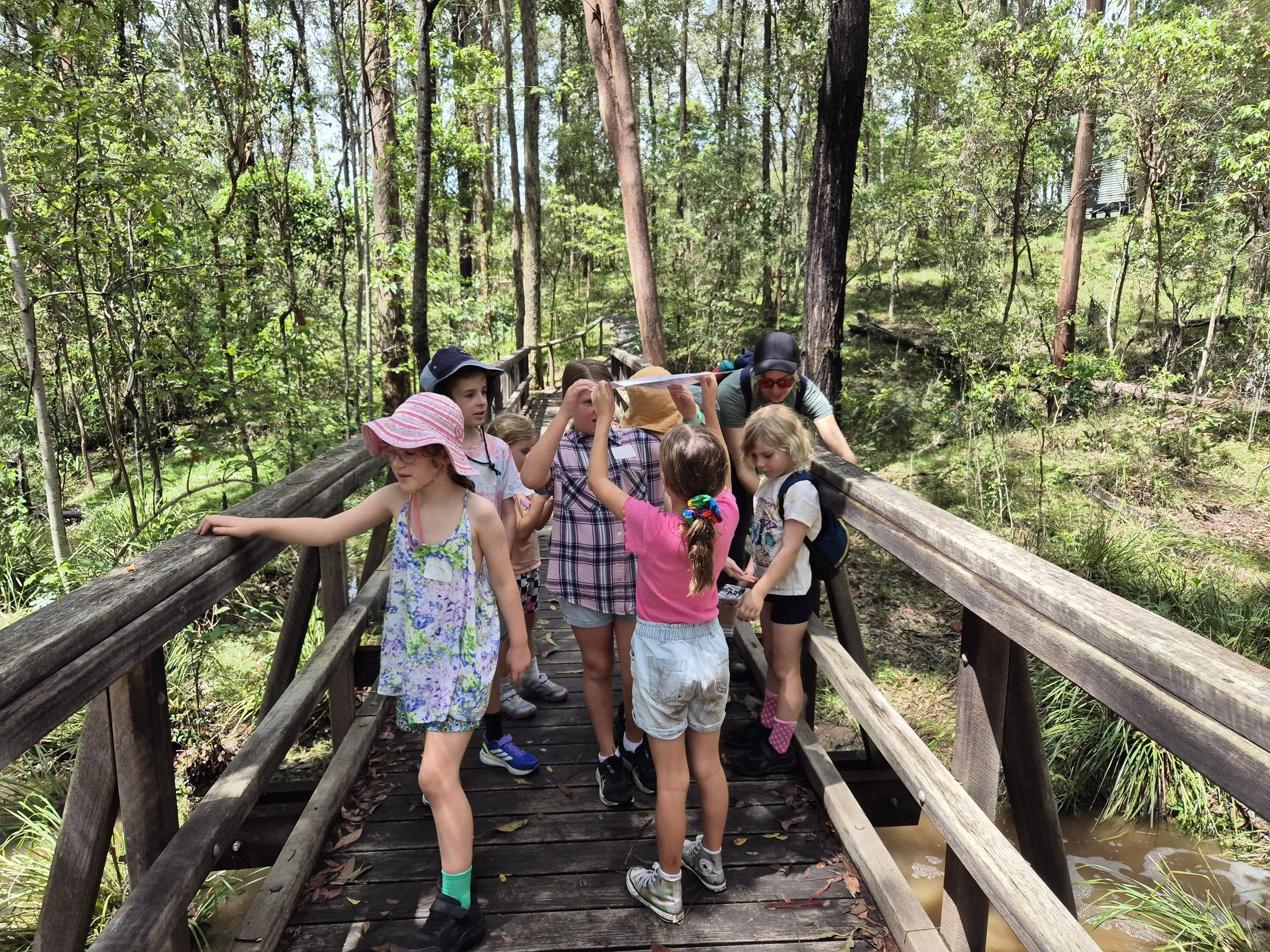
THECA currently has two activities designed for children and families (Please note that registration is essential for each and that fees apply):
Our School Holiday Activity program is offered four times a year, led by experienced teachers, and including both indoor and outdoor hands-on activities based on a particular nature theme.
Our Forest Family Sundays program is a monthly activity, ably led by Ebony Barber. We’ll spend the morning immersed in nature with an easy group trail bush walk, themed story time, and a shaded picnic break (BYO lunch) at The Hut Environmental Centre. Parents and friends can then catch up over a complimentary tea or coffee in The Hut while the kids engage in a fun nature-based learning activity indoors to wrap up the event. See the full 2026 program here.
See the Events Diary for upcoming dates for both programs and for information on fees and registration.
Education - Birdwalks
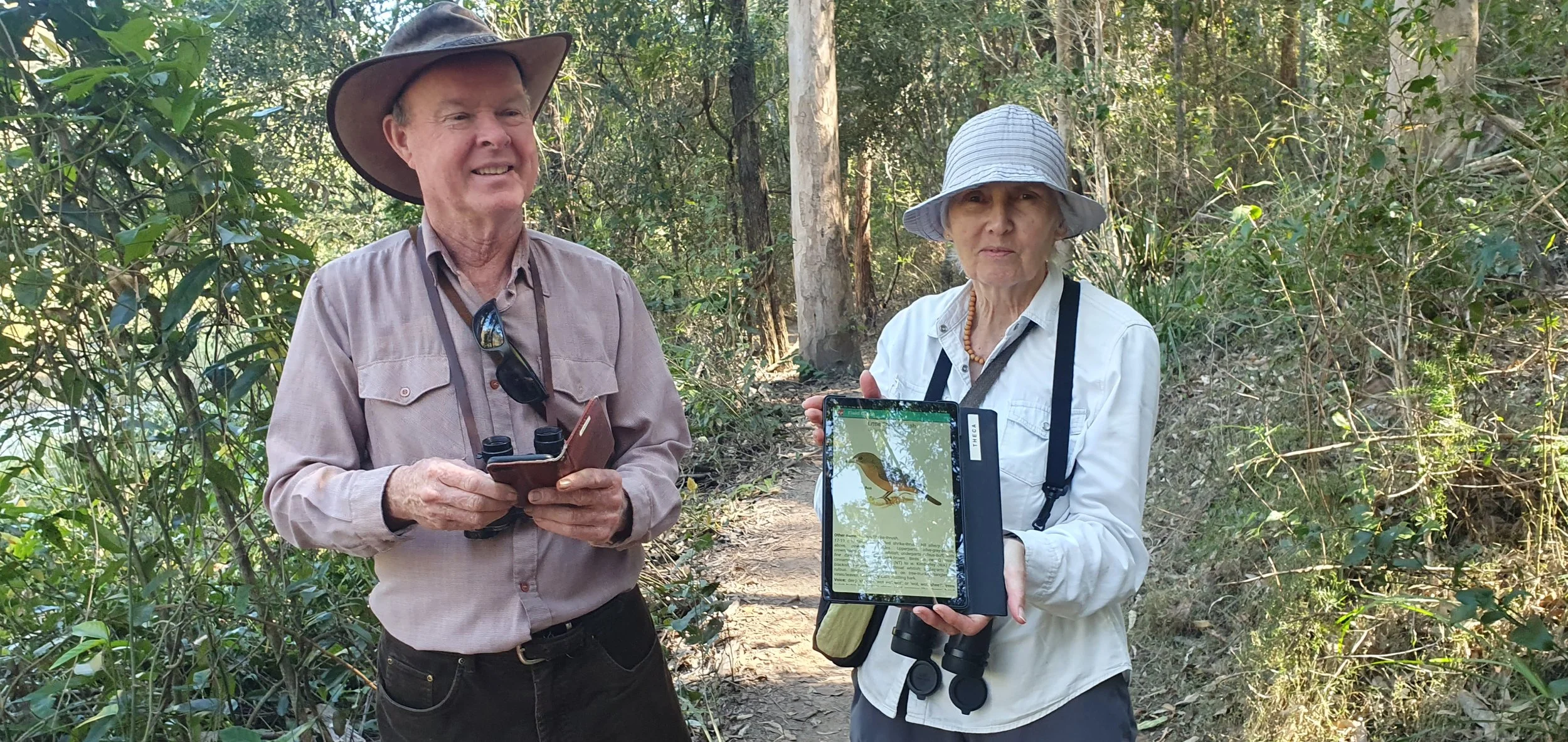
THECA monthly birdwalks are an easy way to see something of the wonderful variety of bird-life around Brisbane. Everyone is welcome!
Click for the 2026 list of walks
Nickie Westcott is the main contact on 0418 354 709 if the weather looks uncertain.
A two hour walk, suitable for all ages and experience.
Usually on the Saturday of the last full weekend of the month (Jan - Nov).
Email activities@theca.asn.au
Free for THECA members $2/person suggested donation for non-members, helps with end-of-year refreshments, First Aid kit etc.
See Events Diary for details of upcoming bird walks.
Education - Nightwalks
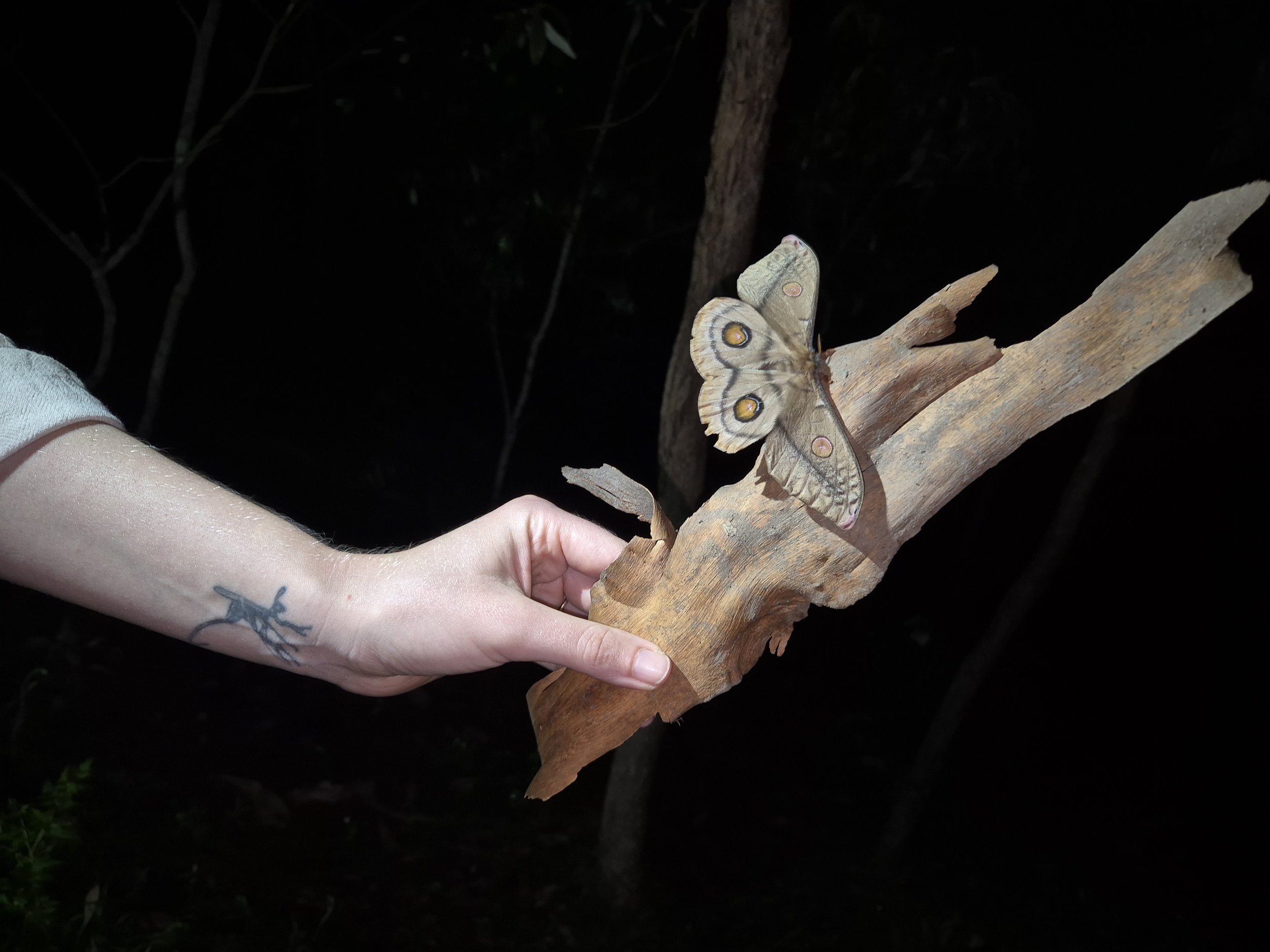
Family nightwalks started in 2014, and have allowed participants to see some of our bushland ‘nightlife’ - mammals, reptiles, microbats and others. More recently, we’ve focused on insects - with the help of light-traps using a “LepiLED” ultra-violet lamp which attracts moths and other nocturnal flying insects. We also have other ultra-violet torches to help spot scorpions on trees.
Thank you to Jessa Thurman, Christian Perrin and Ethan Yeoman for contributing to these evenings as well as other entomologists/ ecologists who attend.
Most sightings are uploaded to iNaturalist under the Mount Coot-Tha and Surrounds Project
These events are also written up in our Quarterly Newsletters. The digital versions are under the Publications tab.
See Events Diary for upcoming nightwalks.
Education - Workshops
Workshops: Workshops focus on specific topics, whether for members, the general public, or other groups. Previous events include a Eucalyptus tree identification workshop run by our guest Rod Fensham and open to the public, or ecological monitoring for Environmental Mangement Certificate I trainees.
See the Events Diary for upcoming workshops.
Conservation - Bushcare
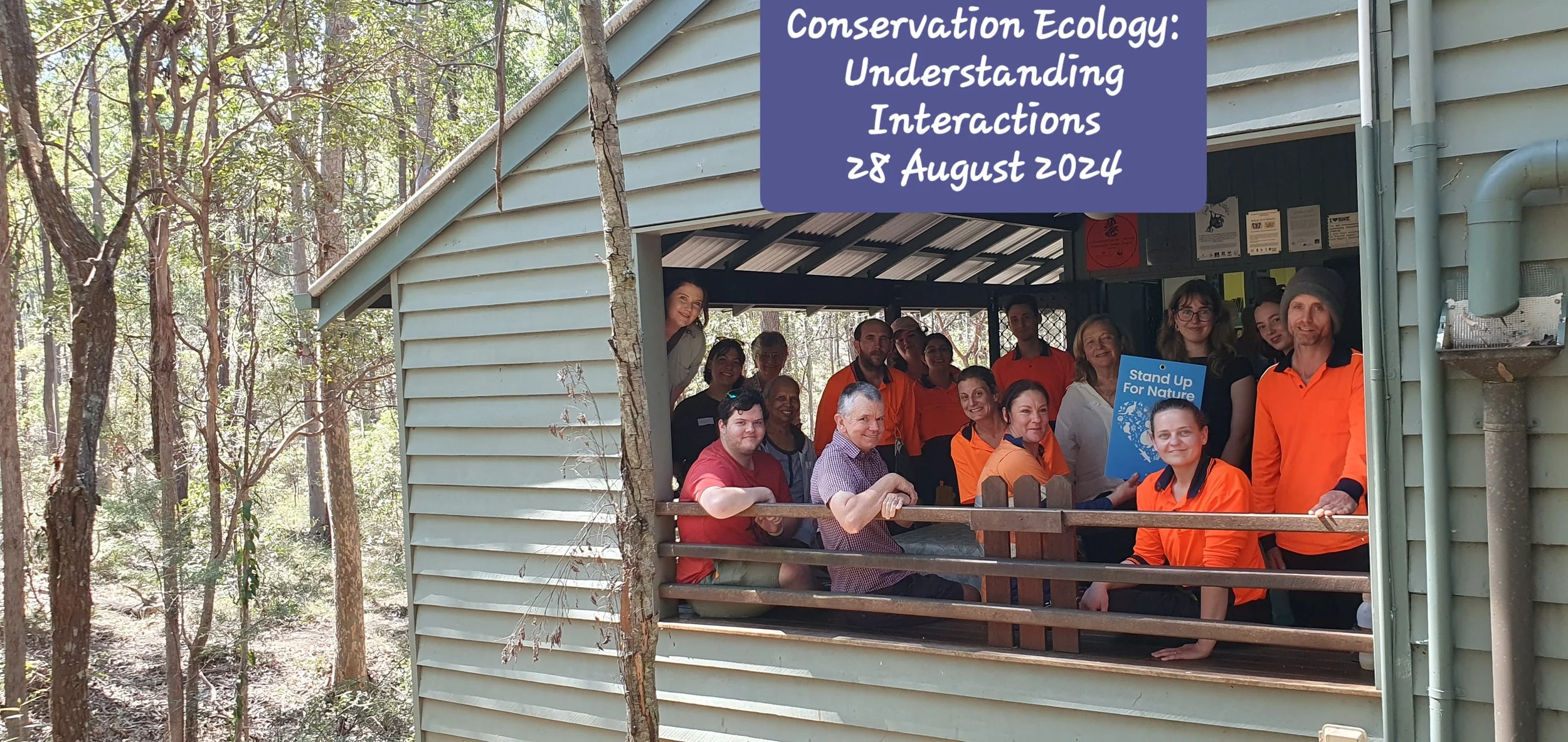
From its early days THECA has worked to conserve the local bushland, initially working to clear lantana, build erosion barriers, and replant the adjacent gulley feeding Cubberla Creek.
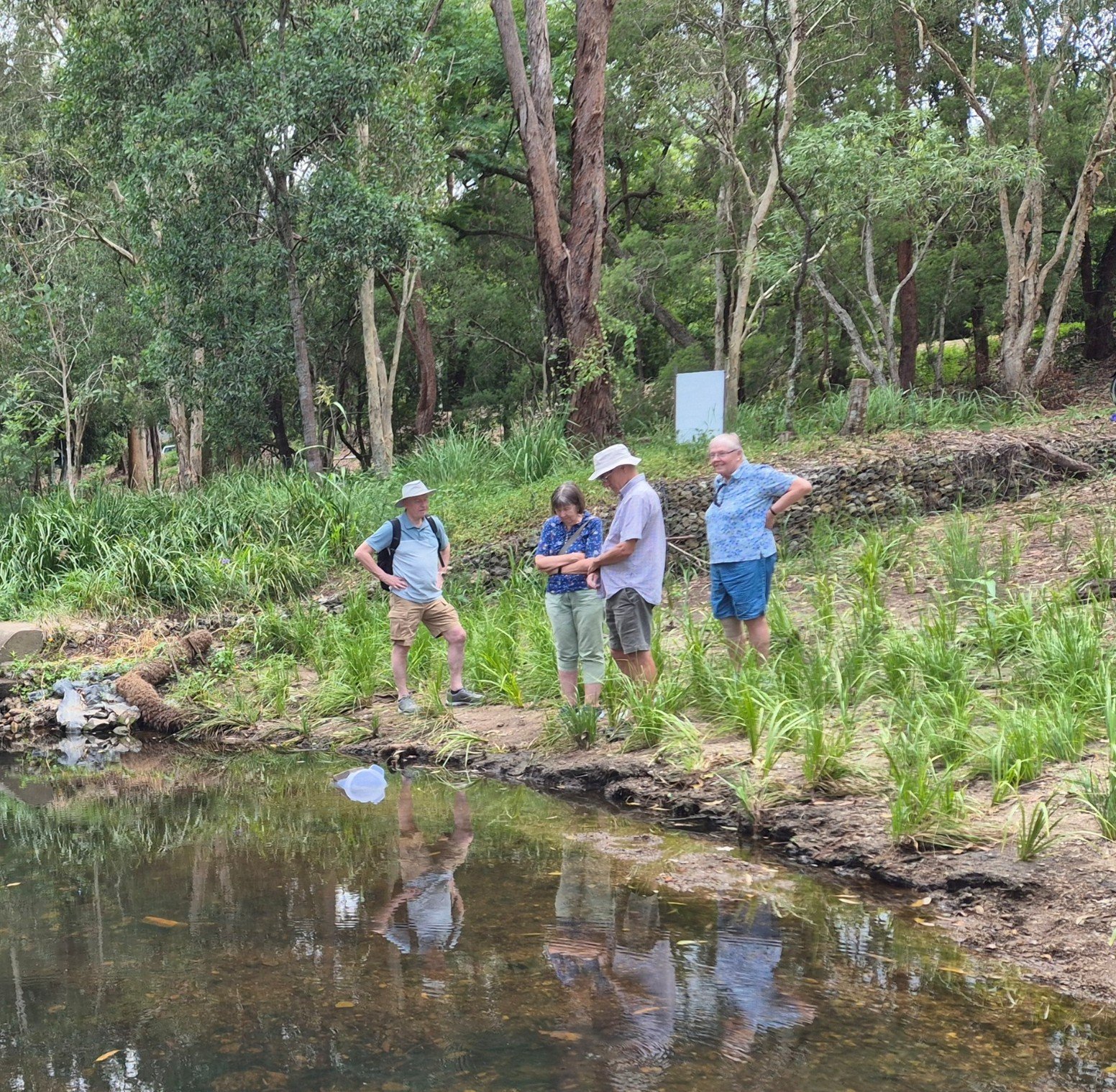
Our Mother-of-Millions group works on the 1st Saturday morning of each month to control this weed (Bryophyllum spp.) near the Hut, and the Cicada Park group meets on the last Sunday of the month, contributing to the creekside restoration work led by our area’s active and hard-working catchment group, CWCN).
The Wandering Weeders, a free ranging group who work over 10 hectares on the edge of Mt Coot-tha Forest Park, near the Hut. Their work on Wednesday mornings between mid-January and mid-December is focused on areas around walking tracks, targeting weeds including signal grass and those weeds spread by birds. To date the group has managed to eliminate ochna, corky passion vine, asparagus fern and lantana at their site.
Volunteers are central to these programs - please contact THECA to volunteer or learn more. Our bushcare activities are supported by Brisbane City Council’s Habitat Brisbane program. See our Events page for working bee dates.
Conservation - Butterfly Hilltopping Project
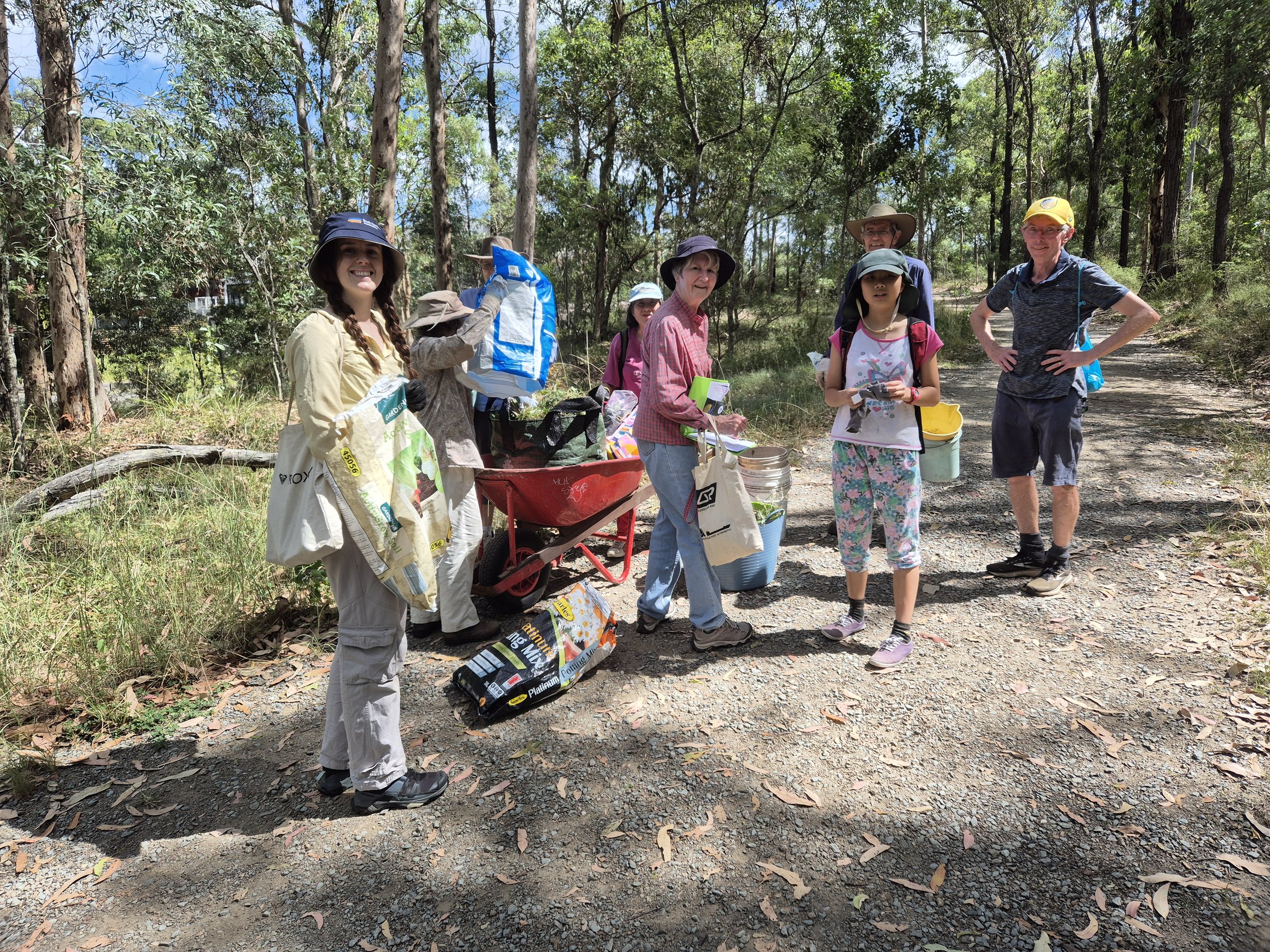
Why do Butterflies need hilltops? And why is a group of volunteers working on a hilltop on Mt Coot-tha, removing weeds and planting local natives such as Kangaroo Grass?
It's for the sake of the butterflies and other insects that use the hilltop as a place to meet and find a mate. Some butterflies will travel several kilometres to a hilltop - but will be put off by cleared vegetation, or by displacement of native plants by exotic species.
Since 2005, THECA’s Butterfly Bushcare Group has been working on a hilltop site along Mt Coot-tha's Reservoir Trail to restore the natural vegetation to encourage butterflies and other insects, many of which are locally under threat due to urban development and loss of food plants for their caterpillars. Loss of hill-topping sites adds one more threat to their existence.
This project is part of the Habitat Brisbane program. Follow the link to Habitat Brisbane’s list of groups and look for ‘Butterfly Bushcare Group-Mt Coot-tha’ in the table or the site just west of the Summit on their map.
This group usually meets on the 1st Sunday of the month, 8:30-10:30. please contact THECA to volunteer or learn more, and check the Events Diary to confirm upcoming dates.

Conservation - Cane-Toad Tadpole Trapping
Cane toads have been very successful at infiltrating our waterways and spreading across bushland. Not only are they toxic to predators at each stage of the life-cycle, they breed prolifically (up to 35,000 eggs each time they reproduce) and are voracious eaters, so they can both out-compete native frogs and devour them and their offspring.
To give our native frogs a better chance of reproducing, it’s useful to keep cane toad numbers under control at some of their key breeding sites. Using traps from Watergum Community and lures developed by Prof. Rod Capon and his team at the University of Queensland, we have supplemented summer-time toad-busts at Cicada Park with cane-toad tadpole trapping starting in 2025.
This lure is derived from the adult toad’s poison glands, attracting up to several hundred tadpoles at a time, which are euthanased humanely (cooling and freezing). We’ll monitor the area with the hope that the combination creek-side restoration and cane-toad control will benefit our native frogs.
Community - Monthly Meetings
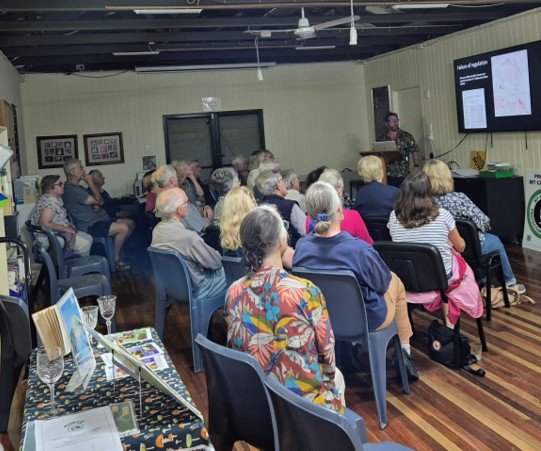
A great chance to meet others over refreshments and hear from a knowledgeable invited speaker. Topics are broadly ecological or environmental, ranging from endangered species to electric vehicles, and from fungi to floods. We have been very fortunate to host some of our leading scientists, students and citizen experts as speakers (see recent speakers and topics). Presentations usually run for about an hour including questions, with informal discussions afterwards.
All members and non-member visitors are welcome, but we appreciate gold coin (or card) donations from non-members.
We try to include an outline of each THECA Talk in the subsequent edition of THECA News. Please let us know if you'd be happy to do an occasional write-up for us.
Where: The Hut, 47 Fleming Road, Chapel Hill
When:
Feb-May and Sep-Nov: 7:00pm for refreshments and 7:30 pm for the presentation, fourth Wednesday of the month
Jun-Aug: 12:30 pm for refreshments and 1:00 pm for the presentation, fourth Saturday of the month
See Events Diary for upcoming meeting dates and details.
Community - Morning Teas
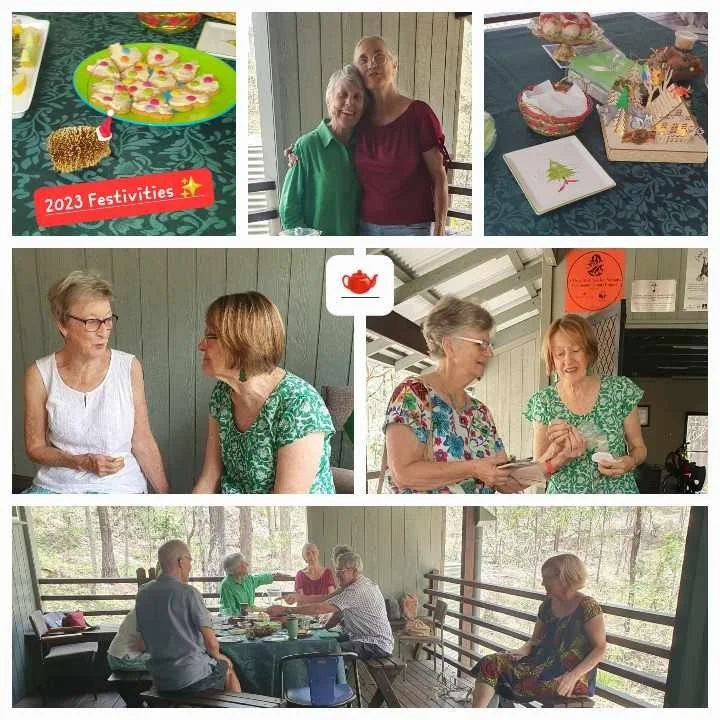
A chance to relax and enjoy a chat with others over refreshments on the verandah, overlooking the beautiful bush. Non-members are welcome to come along and meet us as an easy way to learn more first-hand.
Our morning teas are held at 10:30 am on the first Tuesday of the month from February to November. Please bring a plate to share - tea and coffee provided.
See Events Diary for upcoming meeting dates and details.
Community - Art Show
“The Wild and the Beautiful”
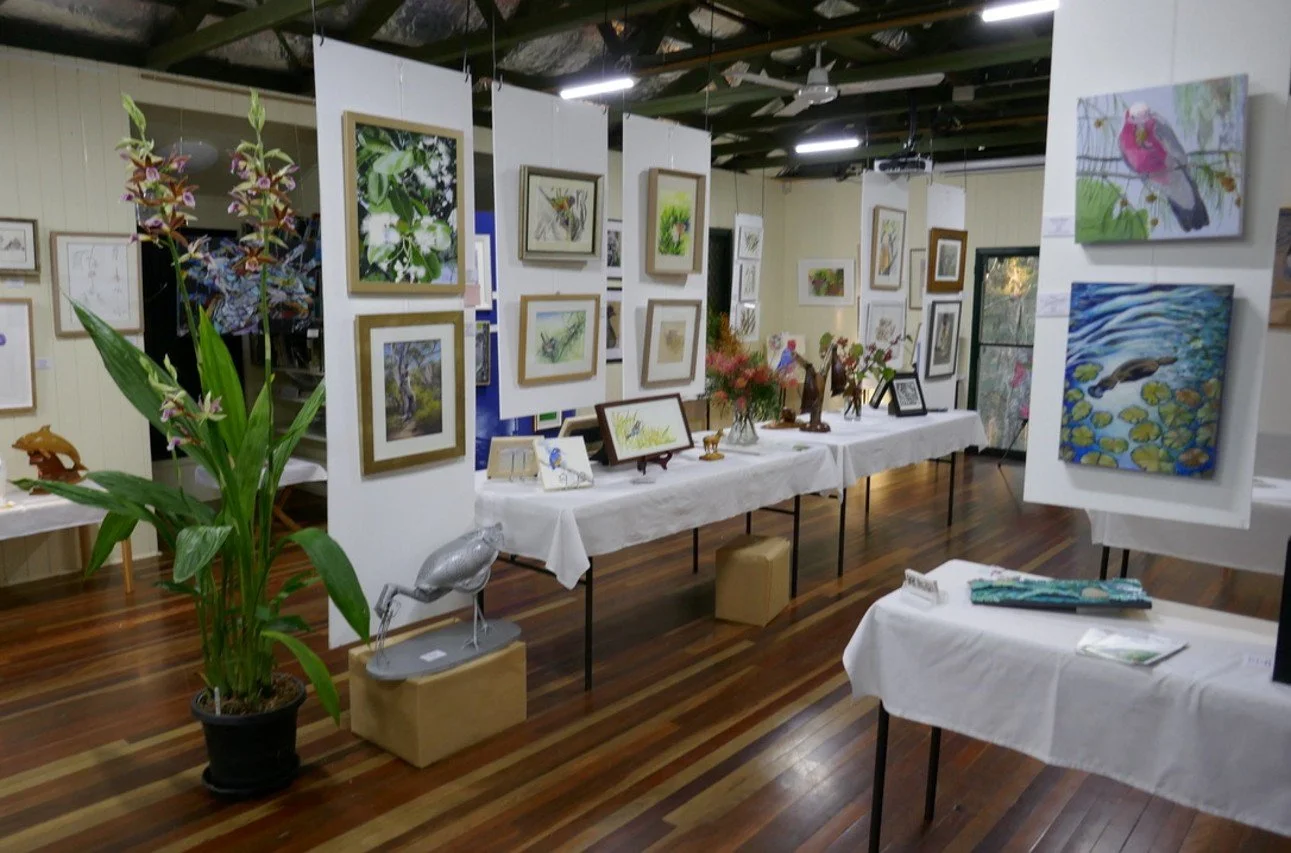
Curated by Christine Zupanc, THECA has for several years run an annual Art Show in early October, with a nature theme. Local artists exhibit their work (available for purchase), and prizes are awarded for the “People’s Choice” selected by visitors, as well as other categories.
This year (2026) the Art Show has its official opening reception on the evening of Friday October 2nd (early viewing with wine and cheese, $10 per person, contact us). There is no charge to attend over the weekend or on the final day (Monday October 5th), though donations are welcome and there is a raffle - drawn on the final day).
THECA has developed a project to monitor Brisbane’s carbon dioxide levels. Although cities are responsible for the majority of the world’s greenhouse gas emissions, and carbon dioxide is the most important of these, very few cities monitor CO2 levels, in part because it was not considered a pollutant.
We have monitored daily and seasonal cycles in several locations, and found clear associations with peak traffic.
Using low-cost but quite accurate sensors, we have collected data for most of 2023 and 2024, and are shortly launching a new phase with improved measurement accuracy.
Learn more here.
Research - CO2 Monitoring

Research - Monitoring our ecosystems and microclimate
We are starting a new project to better understand our local ecosystems. Making use of new and more affordable measurement tools, we can gather valuable information about
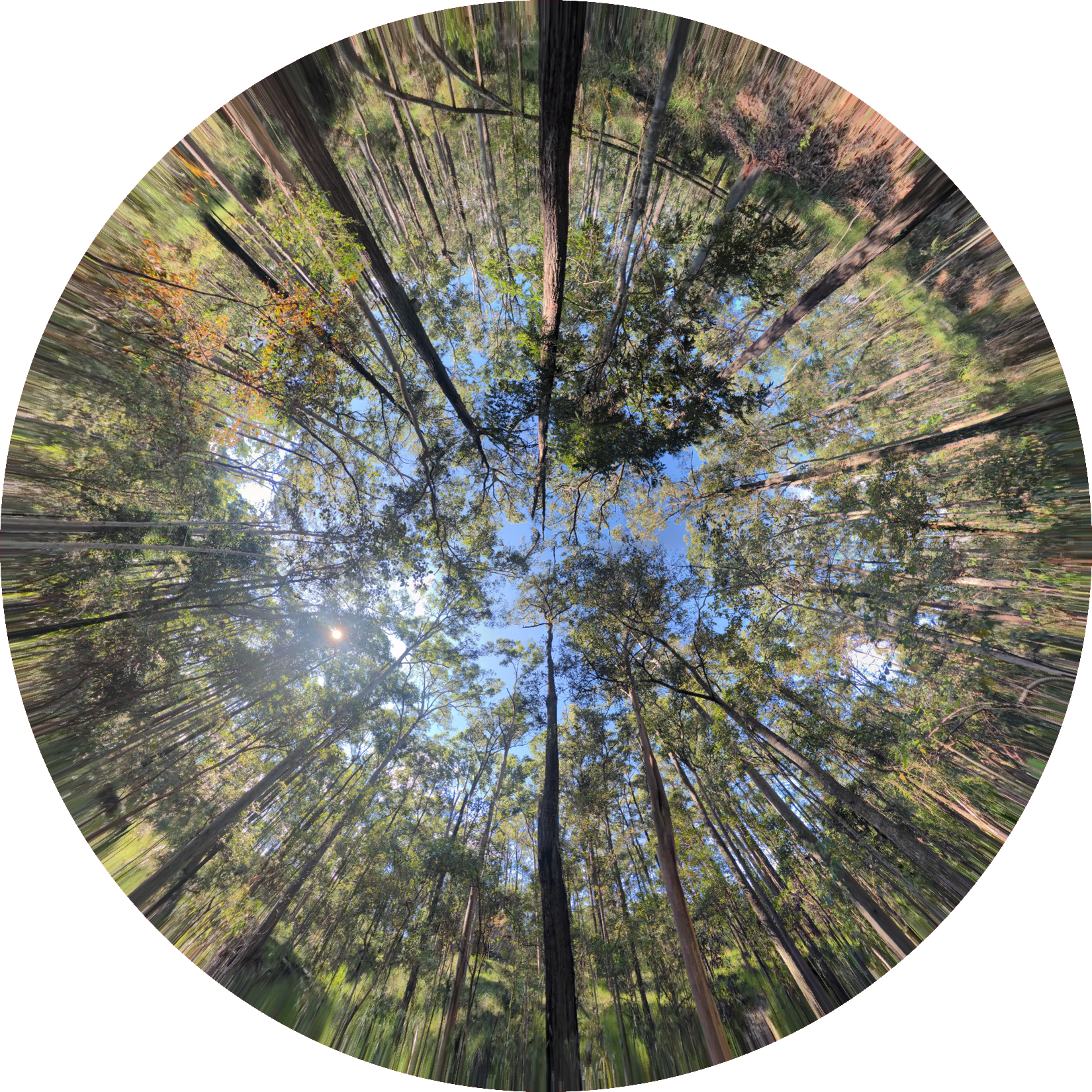
canopy cover (with spherical photos to measure how much is sky)
temperatures and relative humidity (with our THECA weather station and portable loggers). Learn more here.
bird calls (using our ‘birdNET-Pi’ system and Cornell University’s databases)
significant trees (locations and dimensions, but in the future, continuous data from dendrometers and other sensors).
Over time, we aim to establish a series of systematic observations which can be used for environmental education and made available to researchers.
Research - THECA Research Student Scholarships
In 2025 THECA launched a scheme to support research projects on environmental topics relevant our area (defined as Mt. Coot-tha and surrounds), open to students at the University of Queensland, Queensland University of Technology, and Griffith University. We were very pleased to award the first scholarship (worth $5,000 per year for three years) to UQ’s Angela Webb, whose topic is “The Role of Urbanisation on the Emergence of Reptile Fungal Pathogens in Australia”.
The 2026 Round is now closed. Stay tuned for news on the next round.
Get involved!
Only with the generosity and involvement of volunteers, members, businesses & organisations within our community, are we able to do to the valuable work we do for our environment.