Bush vs. Suburb: What can we learn from BirdNET-Pi?
Since the start of the year, we’ve been logging bird-calls at the Hut with a small computer running BirdNET-Pi - open-source software first developed by Philip McGuire (now taken over by ‘Nachtzuster’)
BirdNET-Pi uses a Raspberry Pi computer and a microphone as a 24/7 bird-monitoring station, running artificial intelligence to listen for, record, and identify bird calls in real time. It’s built on the core BirdNET AI framework created by the Cornell Lab of Ornithology (project here) and Chemnitz University of Technology.
How does it work?
Listening & Recording: A connected microphone captures ambient outdoor sounds continuously.
Audio Processing: The software splits audio into short segments and turns them into spectrograms, capturing each call’s frequency and pattern.
AI Identification: A lightweight machine learning model compares the spectrograms against Cornell’s database of known bird calls for the region.
Data Storage & Display: Matches are saved on the Raspberry Pi and can be viewed on a web dashboard alongside confidence scores, audio clips, and trend charts.
The IDs are not perfect - some birds don’t appear to be in the database yet but are definitely calling (e.g. Booboock owl, Bush stone curlew etc.). Noisier, more frequent callers are over-represented, and some identifications may be inaccurate.
What have we learned?
We’ve recorded over 70,000 calls since January at The Hut (40 species) and at another station in the nearby suburb (Merri-Merri estate in Chapel Hill, just 1 km away - 60 species). What can we see from comparing calls at these two nearby sites?
Firstly, different species prefer different places…
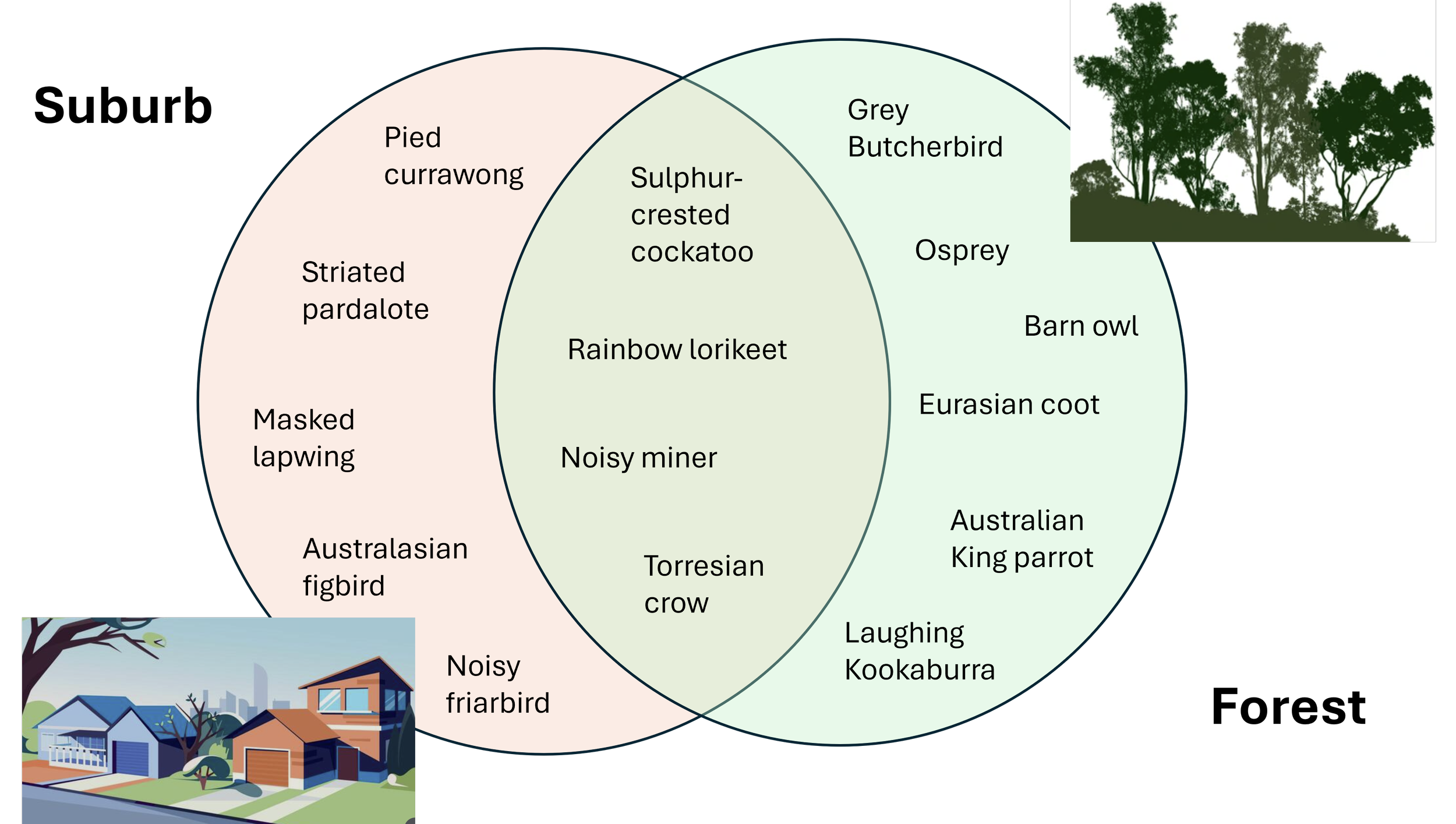
Here are the top ten callers identified in the forest (near The Hut) and in the suburb, four of which are frequently heard in both places. Of course, being heard more often in one site doesn’t mean that species isn’t ever heard in the other.
Secondly, some species are commuters…
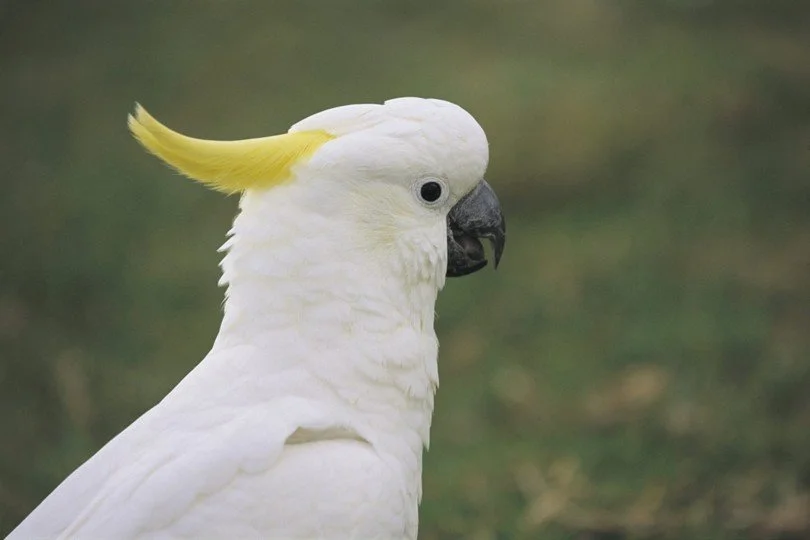
The times at which birds are mostly heard is consistent with some species tending to roost inthe forest and visit the suburbs in day-time. For example, the Sulphur-crested cockatoo is much in evidence up to and before 6 am near the Hut (forest), and again from 5 pm, but is more often heard during the daytime in the suburb.
Near the Hut, calls up to 6 am and after 5 pm were 47% of their total, but in the suburb, only 18% of the calls were at those times (see the pie-charts for each site below).
This fits with what local residents with a view of the mountain will often see - cockatoos leaving the forest in the morning, and returning to its safety in late afternoon, having had their pick of the varied menu they find in the suburbs. Like so many patterns, there are exceptions and overlaps, but we look forward to learning more from analysing these calls